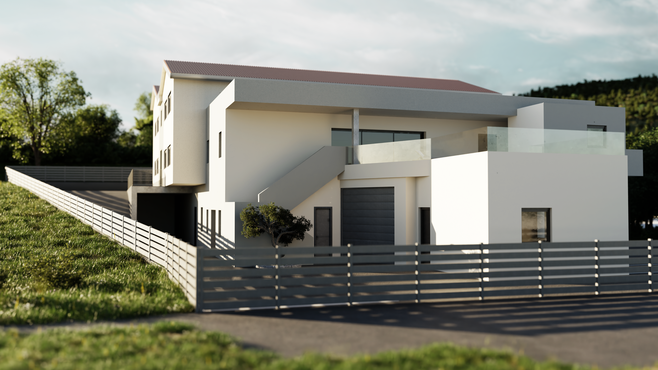
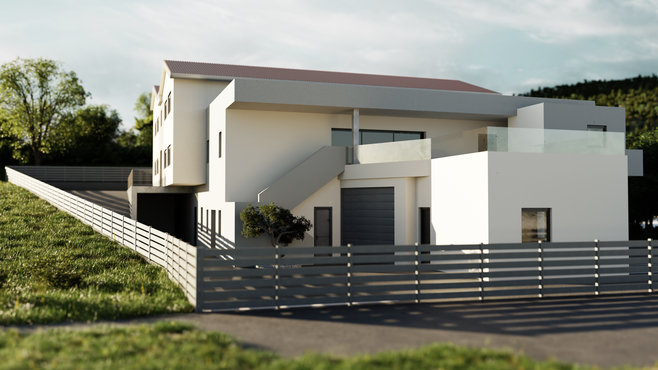
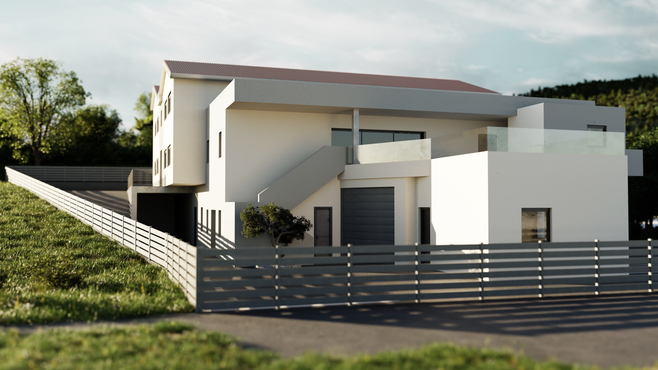
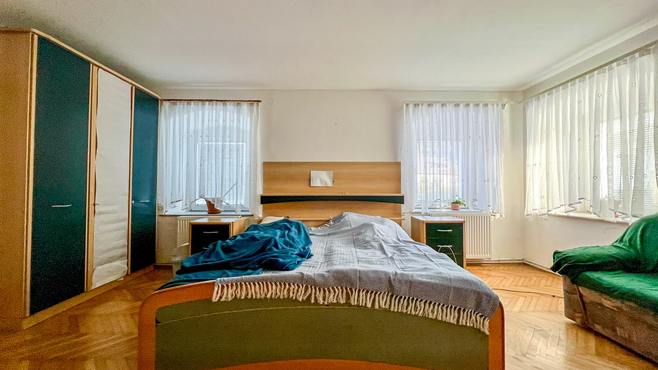
Are real estate prices in Slovenia overvalued?
10. 11. 2026.
Residential real estate prices in Slovenia continue to rise, while the Bank of Slovenia warns that prices have moved significantly away from long-term economic fundamentals. This does not mean the market will necessarily fall. However, it does mean that when buying or selling today, it is even more important to understand the market well, realistically assess a property's value, and review your financial options.
Real estate prices are still rising
In the first half of 2026, residential property prices were more than 9% higher than a year earlier. Over the past three years, the average year-on-year increase was about 7.4%. The Bank of Slovenia estimates that price growth could continue in the future due to limited supply. The main reason is quite simple: demand for apartments and houses remains high, while supply is insufficient.
This is especially noticeable in Ljubljana, on the Coast, and in tourist destinations, where demand exceeds supply.
What does it mean that properties are "overvalued"?
The Bank of Slovenia warns that faster price growth has also increased the estimated overvaluation of real estate. Put simply: property prices are rising faster than some other important factors, such as the general price level and broader economic conditions.
This does not mean that every property on the market is automatically overpriced. Two similar houses in the same location can have very different values depending on:
• condition and year of construction,
• quality of renovation,
• plot size,
• view and orientation,
• parking,
• energy efficiency,
• documentation,
• micro-location.
That is why it is important to assess the value of each individual property specifically, and not only on the basis of general statistical data.
Rents are rising even faster
According to the data cited in the article, the growth of residential rents in the second quarter of 2026 increased to 10.4%. This is also important for buyers weighing renting versus buying. If rents rise over the long term, purchasing your own property may become more attractive for some buyers—especially if they have stable income, sufficient own funds, and can obtain a loan on acceptable terms. Of course, when buying, it is also necessary to consider the costs of the loan, maintenance, taxes, and any potential renovations.
Why isn't supply keeping up with demand?
One of the bigger problems of the Slovenian real estate market remains the shortage of new housing. The number of residential buildings for which building permits were issued decreased year-on-year by 3.5% in the first half of 2026. The Bank of Slovenia therefore estimates that supply will likely not catch up with demand significantly faster in the future either. Construction is further hampered by high building material costs. For the market, this means that quality properties in good locations remain in demand.
What about housing loans?
In August 2026, banks approved 17% fewer housing loans than in August a year earlier, indicating somewhat more subdued lending activity.
At the same time, the Bank of Slovenia announced a proposal for a change in the calculation of creditworthiness. The minimum amount that must remain available to an individual after paying all loan obligations would, under the proposal, increase from €745 to €840 per month, presumably from 1 January 2027.
If the change is adopted, it could mean slightly lower borrowing capacity for some buyers. Therefore, for those who are already actively looking for a property, it makes sense to check financing options with the bank in good time.
What does this mean for sellers?
For sellers, the market is still relatively favorable, mainly due to limited supply. However, strong price growth does not mean that any property can be put on the market at an arbitrarily high price.
Buyers today are better informed and more cautious. If the initial price is too high, a property can remain without serious interest for a long time despite a strong market.
Can we expect prices to fall?
On the one hand, the Bank of Slovenia warns of increased overvaluation; on the other hand, factors that support prices remain present—primarily limited supply and strong demand in the most sought-after locations. Therefore, there is currently no simple answer as to whether it is the "right time" to buy or sell.
A much more important question is: is the specific property correctly priced, and does it match your long-term goals?
At Elite Property Slovenia, we monitor market conditions and, for each property individually, assess the location, condition, comparable listings, and sales potential.
Source: Finance, based on the findings of the Bank of Slovenia, October 2026.