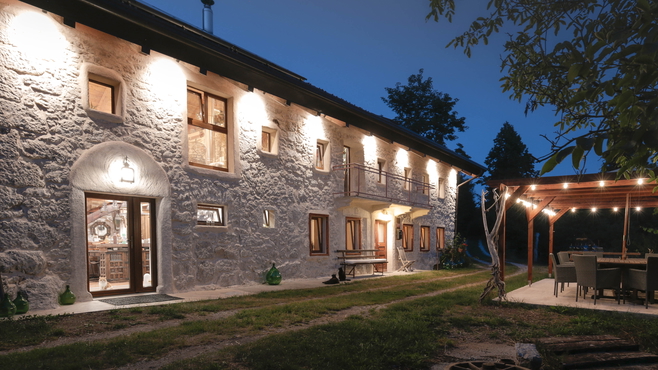
The finest selection of
luxury properties
in Slovenia

Elite Property Slovenia

~ Where Refined Living Meets
Intelligent Investment

Explore properties

Elite Property Slovenia is the leading boutique luxury real estate agency in Slovenia, presenting a curated portfolio of exceptional properties in Slovenia’s most sought-after locations.


We advise international clients on premium residential and hospitality property investments across Slovenia.


Beyond traditional brokerage, we serve as a long-term partner to our clients, offering strategic guidance and tailored support throughout property acquisition, ownership, development, and relocation to Slovenia.

How to buy

Buy property in Slovenia with expert guidance through every stage of the process. We help international buyers navigate legal requirements and complete a secure purchase.

How to buy
Card Image

Investment opportunities

Explore carefully selected real estate investment opportunities in Slovenia, including hotels, commercial real estate, auctions, and rental apartments — with access to exclusive off market deals tailored to your investment strategy.


HOTELS

COMMERCIALS

AUCTIONS

RENTAL APARTMENTS

& MORE

Discover opportunities
https://inspiria.b-cdn.net/elite-property-slovenia/83984b7bbaf4be2987a5d6131c2968a8f4f8bb71_a17b7c77dc.jpg

Sell my
home  

Sell your property in Slovenia with expert guidance, strategic marketing, and access to qualified international buyers. We position your home to achieve the best possible price and a smooth, successful sale.
Find out more

Searching for your dream home?

Find your ideal property in Slovenia with a dedicated buyer’s agent acting exclusively in your interest. We search the full market — including off-market opportunities — to secure the right home for you.
Find out more

Testimonials

From our Clients

"Highly professional, strategic, and results-driven. We were especially pleased to achieve a higher sale price than initially expected. We couldn’t have asked for a better partner in selling our property."


Irena P.

"Working with Elite Property Slovenia was an outstanding experience from start to finish. Their understanding of the market, attention to detail, and international approach made the entire process seamless. We felt well advised at every stage and ultimately secured a property that perfectly matched our expectations."


Jenny M.

"As international buyers, we didn’t know much about the local real estate market, so having the right support was very important to us. Eva and her team were professional, approachable, and easy to work with. They guided us through everything — from finding the right property to handling the legal side — and made the whole process feel straightforward and stress-free."


Tom B.

"Highly professional, strategic, and results-driven. We were especially pleased to achieve a higher sale price than initially expected. We couldn’t have asked for a better partner in selling our property."


Irena P.

"Working with Elite Property Slovenia was an outstanding experience from start to finish. Their understanding of the market, attention to detail, and international approach made the entire process seamless. We felt well advised at every stage and ultimately secured a property that perfectly matched our expectations."


Jenny M.

"As international buyers, we didn’t know much about the local real estate market, so having the right support was very important to us. Eva and her team were professional, approachable, and easy to work with. They guided us through everything — from finding the right property to handling the legal side — and made the whole process feel straightforward and stress-free."


Tom B.

Off-Market Offers


We provide access to off-market properties in Slovenia that are not publicly listed. Through our network, we connect buyers with exclusive opportunities not available on the open market.

Contact us
Banner Image

News & Articles

Warum Slowenien für internationale Immobilienkäufer immer attraktiver wird

Warum Slowenien für internationale Immobilienkäufer immer attraktiver wird

Ein sicheres und stabiles europäisches Land Slowenien ist Mitglied der Europäischen Union, der Eurozone und des Schengen-Raums und bietet dadurch ein stabiles politisches und wirtschaftliches Umfeld sowie ein transparentes rechtliches System für Immobilienbesitz. Das Land gilt außerdem international als sehr sicher. Laut dem Global Peace Index , der mehr als 160 Länder bewertet, gehört Slowenien zu den 10 sichersten Ländern der Welt . Diese Sicherheit, kombiniert mit einem hohen Lebensstandard und einer ruhigen Atmosphäre, macht Slowenien zu einem immer attraktiveren Ort zum Leben oder Investieren. Hohe Lebensqualität Trotz seiner geringen Größe bietet Slowenien eine beeindruckende landschaftliche Vielfalt. Innerhalb weniger Stunden kann man von den Julischen Alpen an die Adriaküste reisen – von den berühmten Alpenseen wie Bled und Bohinj bis zu charmanten Weinregionen und historischen Küstenstädten wie Izola und Piran . Etwa 60 % der Landesfläche sind von Wäldern bedeckt , und mehr als ein Drittel des Landes steht unter Naturschutz. Diese natürlichen Vorteile tragen zu einer sauberen Umwelt und einem entspannten Lebensstil bei. Auch die Hauptstadt Ljubljana trägt wesentlich zur hohen Lebensqualität bei. Im Jahr 2016 wurde Ljubljana zur Europäischen Grünen Hauptstadt ernannt. Immobilienmöglichkeiten Der slowenische Immobilienmarkt zieht zunehmend internationales Interesse auf sich. Im Vergleich zu vielen westeuropäischen Ländern bleiben die Immobilienpreise relativ wettbewerbsfähig und bieten gleichzeitig langfristiges Wachstumspotenzial. Käufer können aus verschiedenen Immobilienarten wählen – moderne Stadtwohnungen in Ljubljana, Häuser auf dem Land, alpine Chalets oder Villen an der Adriaküste. Zu den beliebtesten Regionen gehören Ljubljana, der Bleder See, der Bohinjer See, das Soča-Tal und die slowenische Küste . Ein verstecktes europäisches Juwel Slowenien verbindet Sicherheit, Natur und Lebensqualität auf eine Weise, die heute immer seltener wird. Seine zentrale Lage in Europa, die ruhige Umgebung und die wachsende internationale Aufmerksamkeit machen das Land zu einem attraktiven Ziel zum Leben und Investieren. Bei Elite Property Slovenia unterstützen wir internationale Käufer dabei, sorgfältig ausgewählte Immobilien zu finden und begleiten sie durch den gesamten Kauf- und Umzugsprozess.

11. 03. 2026.

Why Slovenia Is Becoming an Attractive Destination for International Property Buyers

Why Slovenia Is Becoming an Attractive Destination for International Property Buyers

A Safe and Stable European Country Slovenia is a member of the European Union, the Eurozone, and the Schengen Area , providing a stable political and economic environment and a transparent legal framework for property ownership. The country is also internationally recognized for its safety. According to the Global Peace Index , which evaluates more than 160 countries based on safety, conflict levels, and political stability, Slovenia ranks among the top 10 safest countries in the world . This level of security, combined with a high standard of living and a peaceful atmosphere, makes Slovenia an increasingly attractive destination for those seeking a stable place to live or invest. Exceptional Quality of Life Despite its small size, Slovenia offers remarkable diversity. Within just a few hours’ drive, residents can travel from the Julian Alps to the Adriatic coast , from picturesque alpine lakes such as Bled and Bohinj to charming wine regions and historic towns such as Izola and Piran. Slovenia is also known as one of the greenest countries in Europe , with around 60% of its territory covered by forests , while more than one third of the country is protected nature . These natural advantages contribute to the country’s clean environment and relaxed lifestyle. The capital city Ljubljana further enhances Slovenia’s reputation for livability. In 2016, Ljubljana was awarded the title of European Green Capital , recognizing its commitment to sustainable urban development and green living. Real Estate Opportunities in Slovenia Slovenia’s real estate market has been attracting increasing international attention in recent years. Compared with many Western European destinations, property prices remain relatively competitive while offering strong long-term value. Buyers can choose from a wide range of properties, including modern apartments in Ljubljana, charming countryside homes, alpine chalets, and coastal villas. Popular locations include Ljubljana, Lake Bled, Lake Bohinj, the Soča Valley, and the Slovenian coast , each offering a unique lifestyle and investment potential. A Hidden European Gem Slovenia combines safety, natural beauty, and a high quality of life in a way that is increasingly rare. Its central European location, peaceful environment, and growing international reputation make it an attractive destination for both living and investing. Whether you are looking for a permanent residence, a holiday home, or an investment opportunity, Slovenia offers a unique chance to experience life in one of Europe’s most beautiful and welcoming countries. At Elite Property Slovenia , we help international buyers find carefully selected properties across the country and guide them through every step of the purchasing and relocation process.

15. 01. 2026.

The Largest Residential Projects in Slovenia

The Largest Residential Projects in Slovenia

Expansion of Public and Private Housing In recent months, the state and housing funds have increased their investments in residential construction. It is estimated that approximately 2,000 public rental apartments will begin construction this year, representing one of the largest waves of investment in Slovenia’s history. In addition to public projects, large private and mixed-use developments are also underway, comprising several hundred residential units. The goal is to expand housing supply, relieve pressure on the real estate market, and provide more accessible housing for various social groups — including young people, families, and key professionals. Key Projects Among the largest residential projects in Ljubljana are: Podutik Glince : 387 apartments, construction in two phases. Residenca Emonika : 187 apartments, a mixed-use project with commercial spaces and retail. Novi Bežigrad : 245 apartments in the first phase, with additional phases planned. Regent Quarter : several hundred apartments across three high-rises, including over 500 parking spaces. Parma Nova : first phase 153 apartments, second phase 193 units. Nordika : various apartment types, ranging from one-bedroom units to penthouses. Kolinska Neighborhood : mixed-use residential and commercial spaces. Other significant projects include Linhartova and Vilharjeva Streets , Vrtno Mesto Sibirija , Galaksija Neighborhood , and Urbana Oaza , which together will contribute several thousand new residential units. Why These Projects Matter Slovenia’s housing crisis is evident in high property prices, limited supply, and rising rents. Public and affordable housing can help ease market pressure, increase mobility for young people, and improve overall quality of living. Beyond their social impact, these projects also test the capacity of public institutions and developers. Successful implementation will demonstrate whether the state can deliver promised constructions on time and according to plan. What to Expect If these projects proceed as planned, Slovenia can anticipate a substantial wave of new housing in the coming years, particularly in Ljubljana and its surroundings. This will increase the diversity of housing options — from public rentals to market-rate apartments — and provide solutions to the persistent housing shortage that has challenged the Slovenian real estate market in recent years. However, it is important to note that some projects are still in the permitting phase, meaning timelines and unit numbers may change. The full impact will only become clear in the coming years, but this year’s launches are a strong indicator that Slovenia’s housing market is moving toward greater supply and accessibility. Source: Siol.net

04. 12. 2025.

Amendment to the Real Estate Cadastre Act: Greater Efficiency, Less Bureaucracy, and a Step Toward Full Digitalization

Amendment to the Real Estate Cadastre Act: Greater Efficiency, Less Bureaucracy, and a Step Toward Full Digitalization

On September 25, 2025, the National Assembly adopted the amendment to the Real Estate Cadastre Act (ZKN-A) with 54 votes in favor and 22 against. The amendment introduces major changes in the field of property registration, aiming to simplify cadastral procedures, reduce administrative burdens, and improve digital connectivity between institutions. The law will enter into force 15 days after its publication in the Official Gazette and will apply four months later. According to Miran Gajšek, State Secretary at the Ministry of Natural Resources and Spatial Planning, this represents an important step toward a more efficient system that will ease the workload of both surveying companies and the Surveying and Mapping Authority of the Republic of Slovenia. Less Bureaucracy and Faster Procedures One of the key innovations is the simplification of replacement construction procedures – it will now be possible to delete an existing building and register a new one simultaneously. The collection of personal data about property owners will also be simplified, as such data will be automatically obtained from official registers without the need for additional documentation. Greater Independence for Surveyors Surveying companies will gain direct access to the Kataster information system, enabling them to independently obtain the necessary documents for preparing cadastral surveys. This change will significantly shorten processing times and reduce dependence on the Surveying and Mapping Authority as an intermediary. Introduction of a New Land Valuation System The amendment introduces an authorization system for land valuation, based on examinations, mandatory training, and a public register of authorized professionals. The Surveying Authority will supervise the correctness of the procedures and may revoke authorizations in cases of irregularities. Stronger Connection with the Land Register Another significant change is the enhancement of electronic connectivity between the land register and the cadastral information system. The cadastre will now allow direct access to annotations of prohibitions, such as restrictions resulting from unauthorized constructions. Alignment with Spatial Legislation The law also introduces numerous alignments with other related regulations, particularly in the field of spatial planning. New guidelines are established for parcel marking, boundary modifications, and exceptions for certain court-prepared surveys. In some cases, the marking of regulated boundaries may be postponed for up to five years in planned spatial developments. Digital Transformation of the Cadastre The ZKN-A amendment represents an important step toward the digitalization of Slovenia’s cadastral system. Modernized procedures will ensure faster, more transparent, and user-friendly property data processing. The reform is expected to simplify work for property owners, designers, surveyors, municipalities, and investors who often face time-consuming and fragmented procedures. With this reform, Slovenia moves closer to the goal of a fully digitalized and efficient real estate records management system. Source: Media N24

14. 10. 2025.

Ljubljana Apartment Prices Hit a New Record – What Does This Mean for Buyers?

Ljubljana Apartment Prices Hit a New Record – What Does This Mean for Buyers?

Ljubljana remains a hotspot of the Slovenian real estate market this year as well. The latest data from the analytical company Arvio reveal that the average price per square meter of an apartment in the second quarter of 2025 reached a record €4,448 , which is 2.2% more than in the first quarter and 3.3% more than in the same period last year. On a national level, prices also increased – the average square meter of an apartment rose to €3,266 , representing a 13% growth compared to last year. More Transactions, Fewer Listings The number of transactions in Ljubljana has been rising for the third consecutive quarter – by more than 10% in the last three months. At the same time, the number of active listings is declining; compared to last year, there are over 20% fewer ads on property portals. The gap between asking and achieved prices has narrowed slightly to around 10%, meaning that sellers are willing to make concessions – but only to a certain extent. Housing Loans: Still Favorable Interest Rates Buyers can currently count on average fixed interest rates of around 2.87% , lower than last year. In practice, banks are often willing to reduce rates by an additional 0.5 to 0.7 percentage points. This has boosted demand – in the first half of the year, almost one billion euros in new housing loans were approved, one of the highest figures in the past five years. Housing Affordability: A Slight Improvement Assuming an average salary, a 20% down payment, and a 20-year repayment period, an individual in Ljubljana can currently afford around 30 m² of living space – slightly more than in previous quarters, but still far less than in the past. What’s Next? The macroeconomic outlook remains favorable: salaries continue to rise, unemployment is at a record low of 3.2% , and household savings have surpassed €28 billion . Analysts therefore do not expect major price fluctuations – significant price drops are unlikely, while further growth will be limited. Apartment prices in Ljubljana are at record levels, demand remains strong, and interest rates still offer relatively favorable financing conditions. If you are considering buying, now is the right time to explore your options. Source: Finance.si

16. 09. 2025.

Slovenian Real Estate Market in 2025: A Prime Opportunity for Smart Buyers and Investors

Slovenian Real Estate Market in 2025: A Prime Opportunity for Smart Buyers and Investors

Europe is getting more expensive, Slovenia is lowering prices – the right time to consider your move While Hungary (+5.2%), Portugal (+4.8%), and Croatia (+4.5%) are seeing strong price growth, the Slovenian market has cooled mainly due to a low number of new constructions and a reduced volume of transactions. In the first quarter, only 2,536 residential property sales were completed, of which 1,540 were existing homes. For buyers and investors, this means less competition when purchasing and more room for negotiation. Rents in Slovenia continue to rise A unique feature of the Slovenian market is that rents have increased almost as much as property prices – by 69% over the past 15 years. Demand for rentals is growing, offering investors stable returns on rental properties. By comparison, in most EU countries rents have grown at only half the pace of property prices, while in Slovenia the ratio is almost equal. Fewer new builds = higher value for existing homes Slovenia builds fewer new apartments than most EU countries – the share of newly built properties in all transactions is just 17%, below the EU average of 19%. In the long run, this means that with a limited supply, the value of existing homes could start to rise again as demand strengthens. Why is now the right time to act? ✅ Prices are temporarily lower, giving buyers a better starting point. ✅ Rents remain high, making rental properties a profitable investment. ✅ Fewer new constructions strengthen the long-term value of existing properties. Our advice? If you’re considering buying a home for personal use or as an investment, now is the perfect time to explore market opportunities. Our agency will help you find the best properties tailored to your needs and financial goals – whether you’re looking for an affordable purchase or a secure long-term investment. Buying property remains one of the best investments Despite short-term fluctuations, real estate remains one of the safest and most profitable forms of long-term investment. Demand for quality housing stays high, land is limited, and inflation only increases the value of assets over time. Even when the market cools temporarily, history shows again and again – property values grow alongside the economy and living standards. Want to know which properties are the best opportunity right now? Contact us, and together we’ll find a home or investment that will preserve and grow your wealth in the long term.

17. 07. 2025.

New for Property Owners: Buildings Constructed Before 1995 Will Be Automatically Legalized

New for Property Owners: Buildings Constructed Before 1995 Will Be Automatically Legalized

Simplification and Acceleration of Procedures The Ministry of Natural Resources and Spatial Planning aims to significantly speed up the building permit process. One of the main novelties is the introduction of a uniform 30-day deadline for issuing opinions on the compliance of project documentation. If the opinion is not issued within this period, the administrative authority may request it within an additional 15 days. If there is still no response, the opinion will be considered positive. This solution is intended to eliminate the long bureaucratic delays that investors often face. Greater Transparency of Requirements and Responsibilities Under the new rules, opinion-issuing authorities will be required to enter their competencies and requirements into the spatial information system. This will make it clear for each project which opinions are necessary, reducing uncertainty for investors and increasing transparency in the early planning stages. The implementation will be gradual, as the system is not yet fully operational—a three-year transition period is foreseen. Legalization of Buildings Constructed Before January 1, 1995 The most prominent change: automatic legalization of buildings constructed before January 1, 1995. Under current legislation, this presumption only applied to buildings built before 1968. Extending the cut-off date will greatly ease documentation processes for many property owners. The year 1995 was chosen because it marked a reorganization of municipalities and administrative units, from which point permit data is reliably available. Less Bureaucracy for Simple Structures The obligation to report the construction of simple structures (those that do not require a building permit) will be abolished. Supervision of these structures will be delegated to municipalities, meaning fewer administrative procedures for builders. Solution for Unnecessary Issues With “Proof of the Right to Build” It will no longer be necessary to prove the right to build over existing above-ground parts of buildings that are not affected by the new construction. Previously, changes in cadastral rules—which define the building boundary as the most protruding part (typically the roof)—caused legal issues, especially in urban areas where buildings often extend over public land. Tolerance for Minor Deviations During Construction The draft law foresees permissible minor deviations during construction—a building may be shifted up to 1 meter from what is stated in the building permit, provided this does not infringe upon neighbors’ rights. This measure should reduce disproportionate disputes and complications caused by minimal deviations. Digitalization: eGraditev System Launching in January 2026 From 2026, the new eGraditev system will be implemented, further simplifying and accelerating construction and permitting procedures. The digital platform will improve transparency, speed, and reduce the need for in-person visits to administrative offices. Source: Cekin.si. (2025, junij). Objekti, zgrajeni pred 1. januarjem 1995, bodo legalizirani. Cekin.si. Pridobljeno 3. julija 2025 s https://cekin.si/nepremicnine/gradnja/novi-gradbeni-zakon-legalizacija.html

03. 07. 2025.

Constitutional Court Annuls Provision for Legalizing Older Buildings Without a Building Permit

Constitutional Court Annuls Provision for Legalizing Older Buildings Without a Building Permit

Why was the article annulled? Already in December 2023, the Constitutional Court had suspended the implementation of Article 146, and has now definitively annulled it. The Court ruled that the article was inconsistent with Article 140 of the Slovenian Constitution, which grants municipalities the authority to manage spatial development at the local level. According to the Court, the provision prevented municipalities from exercising spatial control, as it did not require verification of compliance with spatial planning documents, spatial regulations, or the basic utility infrastructure of the land. What is a “long-standing structure”? A long-standing structure is a building or other type of structure that was constructed, extended, rebuilt, or had its intended use changed before January 1, 2005. Since then, it must have remained essentially unchanged in size, height, and use. To qualify for a permit under the annulled article, the structure also had to be non-hazardous and not subject to any active inspection measures. Who initiated the constitutional review? The constitutional review was requested by the National Council, which pointed out that the law lacked safeguards — permits could be granted even for structures located in ecologically sensitive areas, without verifying compliance with municipal spatial planning documents. The Constitutional Court agreed, stating that the law did not ensure essential procedural checks. Compared to the legalization process under Articles 143–145 of the Building Act, which require opinions from relevant authorities, the process for long-standing structures was significantly more lenient and excluded municipalities entirely. Municipalities excluded from the process Apart from issuing confirmation of payment for utility contributions, municipalities had no role in the permit process. As a result, a structure could be deemed legal even if it was in clear conflict with the municipality’s spatial development plans. The Court emphasized that construction and spatial legislation are inseparably linked. If municipalities are denied the ability to influence the legalization of structures within their territory, this constitutes a violation of their core authority over spatial planning. What does this decision mean for you? If you own a building constructed before 2005 without a building permit, this simplified path to legalization is no longer available. Legalization will now only be possible through a more complex procedure, which includes verifying compliance with municipal planning documents and obtaining opinions from relevant authorities. For further information on how to proceed in the case of an illegally constructed building, consult a real estate or construction law expert. Vir: St. M., & STA. (2025, 24. junij). Ustavno sodišče razveljavilo del gradbenega zakona glede objektov daljšega obstoja. Siol.net. Pridobljeno 3. julija 2025 s https://siol.net/novice/slovenija/ustavno-sodisce-razveljavilo-del-gradbenega-zakona-glede-objektov-daljsega-obstoja-665860

03. 07. 2025.

Permanent Residence in a Holiday Home – Is It Possible?

Permanent Residence in a Holiday Home – Is It Possible?

Holiday home One of the most common questions in this context is whether it is even possible to register a permanent residence in such a property. The answer is yes—but under certain conditions. What Does the Law Say? According to the Residence Registration Act , a building—or part of it—where a person wishes to register permanent residence must be intended for residential use . The crucial point is how the property is officially registered in the Real Estate Register; actual use for living is not sufficient on its own. Only properties with the following classifications are eligible for permanent residence registration: Single-dwelling buildings (code 1110), Two-dwelling buildings (code 11210), Multi-dwelling buildings (code 11220), Other residential buildings for specific social groups – if legal requirements are met. This may include holiday homes, villas, terraced houses, or country houses—but only if they are registered as residential buildings and actually used for permanent living . Size Requirements and Registry Information In addition to having the appropriate intended use, the property must also offer sufficient usable space , relative to the number of people being registered. Furthermore, the property must: Be correctly recorded in the Land Register , Be classified as a residential building in the Real Estate Register , Not be listed as a holiday property without residential designation. All this information is publicly available through the online portals of the Surveying and Mapping Authority of the Republic of Slovenia (GURS). Why Is the Location Information Document Important? Before registering a permanent residence, it is strongly recommended to obtain a location information document . This is an official document issued by the municipality or administrative unit and contains key information on: The designated land use, Applicable spatial planning regulations, Permitted types of construction on the specific plot. This document helps determine whether the property is suitable for permanent residence or restricted to holiday use. It is also essential if you intend to change the designated use of the property to residential. What Does the Administrative Unit Check? When processing a permanent residence application, the administrative unit checks: The Land Register , The Real Estate Register , The actual use of the building , And, if necessary, legal rights to use the property (ownership, lease, usufruct, etc.). When Is Registration Possible—and When Not? If the holiday home: Is designated for residential use, Meets space requirements, And is actually used for permanent living, then registration of permanent residence is generally possible . However, if the property is registered as a holiday building without residential use , registration is not allowed until the intended use is officially changed. This process must be carried out through the competent administrative unit. Our Recommendation If you are considering registering permanent residence in a property originally built as a holiday home, we recommend that you first: Check all relevant records in the GURS database and the Land Register , Obtain the location information document , And, if needed, consult with a qualified legal expert or administrative officer . Only by doing so will you be able to determine whether registration is possible or if a change of use must first be arranged.

01. 07. 2025.

New Tax on Unused Building Land Coming in 2027

New Tax on Unused Building Land Coming in 2027

Who Will Be Affected? The tax will apply to owners of undeveloped building plots that meet the following criteria: The land is located within a designated building area in the municipal spatial plan. It is fully equipped with public infrastructure (e.g. water, sewage, access roads). No valid building permit has been obtained. The parcel meets the minimum size required for construction as defined in local regulations. The tax will be assessed automatically by the municipality through a formal decision and will be payable annually. For example, for a 400 m² plot, the annual tax would be €120.   When Does the Tax Take Effect? The tax will become mandatory after 2026, following the establishment of a national building land registry. However, each municipality must first adopt an official decree to define the areas where the tax will apply. Municipalities will base these decisions on: Local development priorities, The availability and use of building land, The presence of public infrastructure with no construction activity.   Who Is Exempt? Owners of land outside designated building areas, Land owned by municipalities, Landowners who have obtained a valid building permit.   What Does This Mean for Landowners? If you own undeveloped, fully serviced building land without plans for construction, this new tax may affect your future costs. Now is the time to consider: Selling the land before the tax takes effect, Initiating construction if you have long-term plans, Transferring the land to an investor who can develop it efficiently. This measure could lead to increased supply of land for development, as owners will seek to avoid recurring tax obligations.   Exemption from Infrastructure Contributions for Public Housing Another key provision in the draft law is that all developers of public rental housing, not just municipal housing funds, will be exempt from paying infrastructure contributions. This includes national institutions such as the Housing Fund of the Republic of Slovenia, facilitating cheaper and faster public housing projects.   Other Notable Legislative Changes: Municipal and national spatial plans will be revised faster – in 1 to 2 years instead of several. A new category, “minor changes”, allows for simplified approvals for developments under 5,000 m² or affecting less than 30% of a settlement. Infrastructure contributions must be paid before a building permit is issued. If regulatory authorities (e.g. water, culture, environment) fail to respond within 30 days, their opinion is considered approved by default.   Source: https://www.finance.si/pozor-prihaja-davek-taksa-na-neizkoiscena-stavbna-zemljisca/a/9035830

16. 06. 2025.

Lease Agreement: The Key to a Safe and Clear Property Rental

Lease Agreement: The Key to a Safe and Clear Property Rental

What is important? One of the key elements of a lease agreement is the clear identification of the contractual parties and the property itself. It is important to specify which property (and any additional spaces such as a bicycle storage, parking space, or shared areas) is included in the contract. The landlord, who is renting out the property, and the tenant, who acquires certain usage rights, must be clearly stated. When concluding the agreement, the parties must also determine the duration of the lease. It is crucial to agree whether it is a fixed-term or indefinite lease, as this directly affects the options for renewal or early termination of the contract. If it is a fixed-term lease, exact start and end dates must be specified, along with the conditions for possible extension or termination.   What should a well – drafted contract include and specify ? The contract must also include clear rules regarding the amount of rent, payment deadlines, and the method of transferring funds. It is equally important to agree in advance on any additional costs associated with the use of the property. Responsibility for maintenance and repairs is another important aspect of the lease agreement. It must be clearly stated who is responsible for regular maintenance and who covers repair costs in the event of breakdowns or damage. Typically, the tenant is responsible for daily maintenance, as they use the property, while major maintenance work and investments are covered by the owner. Both parties must inform each other about any changes or deterioration in the condition of the property to prevent major damage and ensure timely action. The contract should also address the possibility of early termination of the lease. It is important to include provisions on the conditions for terminating the agreement before the agreed period, including notice periods and potential consequences for both parties.   Advice It should be noted that the lease relationship is not only subject to the agreement between the parties but also governed by law. Therefore, it is advisable to involve a legal expert when drafting the contract. Only a professionally prepared lease agreement provides a reliable foundation for a successful and transparent rental that protects the interests of both the landlord and the tenant, reducing the risk of potential disputes. Although some choose to draft the agreement themselves, this often leads to complications — from unclear provisions to difficulties in finding a reliable tenant. To avoid such issues, it is best to entrust the entire process to professionals. At Elite Agency, we strive to make renting or leasing property safe, simple, and risk-free. We prepare legally compliant documentation, find suitable tenants, and ensure the entire process runs smoothly without unpleasant surprises. For more information, feel free to contact us.

17. 04. 2025.

Inheritance of Real Estate in Slovenia: Everything You Need to Know

Inheritance of Real Estate in Slovenia: Everything You Need to Know

Who are the legal heirs? Slovenian legislation defines inheritance according to the legal order of succession: First order of succession: This includes the deceased’s children and spouse or common-law partner. They share the inheritance equally, with the spouse having the right to inherit the same share as each child. Second order of succession: If there are no descendants, the deceased’s parents and their descendants (siblings and their descendants) inherit. Third order of succession: If neither parents nor their descendants exist, grandparents and their descendants inherit. Important: If there is a will, it generally prevails over legal inheritance, unless it interferes with the compulsory portions due to legal heirs (e.g., children are always entitled to a compulsory portion).   The process of inheriting real estate The process begins with the convening of a probate hearing at the competent district court, usually at the initiative of a notary who leads the process. Steps: Notification of death and initiation of probate procedure. 2. Invitation to heirs for the hearing. 3. Determination of heirs and the value of the estate (including real estate). 4. Judicial decision on inheritance – decree of inheritance. 5. Registration of ownership change in the land registry. Tip If you are the heir to real estate, it is crucial to propose registration in the land registry after the inheritance decree becomes final. Without this, you are not officially registered as the owner!   Taxes on inheritance of real estate Heirs of the first order of succession (children, grandchildren, spouse) are exempt from inheritance tax in Slovenia. Heirs from the second or third order must pay a tax calculated based on the value of the inherited real estate and the order of succession. The tax rate is progressive and depends on the value of the inherited real estate. Example: • If a grandchild inherits real estate, there is no tax. • If a brother or sister inherits real estate, the tax is paid based on the estimated value.   Inheritance of debts and burdens When inheriting real estate, it is important to know that burdens (e.g., mortgages, easements) and the deceased’s debts are also inherited. Heirs are responsible for the deceased’s debts but only up to the value of the inherited assets. If the debts exceed the value of the estate, the heirs’ personal property is not at risk. Recommendation: If there is a risk that debts exceed the estate value, the heir can request a list of assets or, in certain cases, refuse the inheritance.   Special aspects: Inheritance by will The deceased can specify in a will who will inherit the real estate. However, the law stipulates that certain heirs are entitled to a compulsory portion, which the will cannot override. Example: • If the deceased leaves all real estate to a friend in a will, the children still have the right to demand their compulsory portion. The will must be written and signed by the testator, otherwise, it is invalid.   Inheritance of real estate in Slovenia is relatively transparent but still a complex process. It is recommended to consult an expert in a timely manner, especially if there are disputes among heirs or burdens on the real estate. A properly managed estate can prevent lengthy proceedings and unpleasant surprises in the future.

17. 04. 2025.

Occupancy Permit: What You Need to Know for the Legal Use and Sale of Real Estate

Occupancy Permit: What You Need to Know for the Legal Use and Sale of Real Estate

Why is an occupancy permit indispensable? Legal use of the building Buildings requiring a building permit (except for simple constructions) may only be used after obtaining an occupancy permit. This ensures compliance with regulations, user safety, and environmental protection. Registration in official records Obtaining an occupancy permit is a condition for registering the building in the building cadastre and land register. Without this registration, the building legally does not exist, which can cause serious complications when selling or transferring ownership. Avoiding penalties The construction inspectorate may impose fines or even prohibit the use of the building without an occupancy permit. In extreme cases, it can even order the removal of the illegal building. Possibility of sale or lease Notaries, banks, and other institutions require an occupancy permit to carry out legal and financial transactions involving real estate, such as sales, leases, or obtaining a mortgage. Without this document, such transactions can be significantly complicated or even impossible. Which buildings require an occupancy permit? According to Slovenian regulations, an occupancy permit is required for the following types of buildings: Complex buildings and buildings with environmental impact These buildings require a special verification procedure and technical inspection to ensure compliance with the permit and regulations. Less complex buildings For these, a technical inspection is not mandatory. The permit is issued based on submitted documentation and statements from relevant experts. Single-family houses These buildings can obtain an occupancy permit without proof of structural reliability, provided statements from the supervisor and control manager confirm compliance with the plans. Buildings with trial operation When required by law, initial measurements and operational monitoring must be reported by the investor before the permit is issued. Steps to obtain an occupancy permit Submitting the application The investor submits the application to the competent administrative unit, along with the following documentation: Building permit, As-built project documentation, Statements from the supervisor and control manager, Reports on performed tests (structural analysis, fire safety, energy efficiency, etc.). Technical inspection For complex buildings, a technical inspection is mandatory. Representatives of the investor, contractor, supervisor, and consenting authorities participate. If deficiencies are found, the investor must rectify them before the permit is issued. Issuance of the occupancy permit If the building meets all requirements, the authority issues the occupancy permit. For single-family houses where the building envelope is not yet complete, the permit is issued based on a special supervisor’s statement, but the investor must complete the envelope within three years. Legal consequences of non-compliance Without an occupancy permit, the construction inspectorate may impose a penalty or prohibit the use of the building. Designers, supervisors, and contractors are criminally, financially, and disciplinarily liable for the accuracy of their statements. Without an occupancy permit, you cannot obtain a house number, causing problems in establishing an address and connecting to public infrastructure. An occupancy permit is thus crucial for the legal use of the building, its safety, and compliance with the law. The procedure depends on the type of building: complex buildings require a technical inspection, while less complex buildings require appropriate documentation. Failure to obtain a permit can have serious legal consequences, so it is advisable to prepare thoroughly and seek professional assistance if necessary.

17. 04. 2025.

Building Permit: Everything You Need to Know Before Starting Construction

Building Permit: Everything You Need to Know Before Starting Construction

If you’re considering building a new home, an extension, a complete renovation of an existing building, or changing the purpose of a space, one of the first steps you need to take is obtaining a building permit. This official document provides you with the legal basis to start construction lawfully and safely. If you plan to build closer to a neighboring building, i.e., less than one meter away, or if you are undertaking reconstruction that involves changes to the structure or functionality of the building, a building permit will be essential. The same applies if you intend to change the purpose of the building—for example, converting a garage into a living space or turning a residential property into commercial premises. The Process of Obtaining a Building Permit To obtain a building permit, you need to follow these steps: Obtain basic information from the municipality, administrative unit, or other relevant authorities. Check the land’s compliance with spatial plans. You can do this by reviewing the municipal spatial implementation act, through the spatial information system, or by submitting a request for location information. Determine whether the construction area is protected under special regulations (e.g., nature reserves, water areas, cultural heritage, protected road zones, power lines, or gas pipelines, etc.). Secure the right to build on the land—this can be ownership rights, building rights, or easement. Prepare all necessary project documentation, which must be created by an authorized designer. It is essential that project management is handled by a licensed architect or engineer, depending on the type and complexity of the building. When Is a Building Permit Not Required? The law provides some exceptions where a building permit is not required. However, this does not mean you can build without restrictions. Simple structures, minor reconstructions, regular maintenance works, temporary structures, and works for public benefit can be carried out without a permit. In certain cases where a building permit is not needed, it is still mandatory to notify the start of construction: When removing complex or less complex structures, unless the building is less than one meter from a neighboring structure. In urgent reconstructions due to natural or other disasters, where the building is restored to its original state without changing its position, dimensions, purpose, or appearance. Work must begin no later than three months after the disaster. When setting up temporary storage facilities. Reconstruction and Change of Building Use Reconstruction involves interventions in the technical characteristics of an existing building, which change structural elements, capacity, or implement improvements. At least part of the existing structural elements must be preserved, and the height of the building generally remains unchanged or may be reduced. An increase is allowed only when aligning with regulations on essential building requirements. Reconstruction also includes changes of use, which move the building into a higher category of complexity. A change of use refers to a change in the purpose of the building or part of it, either independently or in connection with maintenance work, minor reconstructions, or extensions. If the change occurs within the same subclass according to the CC-SI classification or within the class of business and administrative buildings, it is not considered a change of use.

16. 04. 2025.

Major residential projects coming to Ljubljana in 2025

Major residential projects coming to Ljubljana in 2025

Foto: Mendota   Among the major players, Slovakian Corwin and British Zetland Capital stand out, while local companies like Prva hiša, Kolektor Kooling, and Iskra Impuls are also notable. In the future, both municipal and national housing funds are expected to build intensively.   Several major projects are expected to start construction this year or next year: Rezidenca Emonika : The investor Mendota Invest plans to build a mixed-use complex with 187 apartments, including a shopping centre, two hotels and office space. The project will be located in the area of the new Ljubljana passenger centre. Novi Center Povšetova : the Public Housing Fund of the Municipality of Ljubljana will build 361 apartments for rent at non-profit rents on the site of the former Povšetova collection centre. Novi Bežigrad : Investor Zetland Capital will build 245 apartments on the site of the former Mladinska knjiga printing house, which will be ready for occupation in 2027. An additional 300 apartments are planned on adjacent land. Regentov Kvart : The company Brusnica plans to build 356 apartments in three high-rise buildings in Dravlje, which will also include an underground garage with more than 500 parking spaces. Glince Podutik neighbourhood: the Housing Fund of the Republic of Slovenia will build 387 apartments in Podutik in two phases. Pod hribom: The Kolektor Kooling and Iskra Impuls project will offer 111 apartments of various sizes in seven buildings along Šišensko hill. Parma Nova : Zetland Capital plans to build 153 apartments in the first phase and another 193 in the second phase on Parma Street. Nordika: Corwin will build 290 apartments in an 82-metre high-rise on Masarykova Street, comprising one-, two-, four- and penthouse apartments. Kolinska : Corwin will build 464 apartments, offices and retail premises on the site of the former Kolinska factory in cooperation with the Czech investment company Hartenberg. Linhartova and Vilharjeva ulica : Various projects are planned for the area east of the Gospodarsko Výstavišče, including the extension of the Baraga Seminary, the construction of new residential towers and a commercial and residential building. Vrtno mesto Sibirija : The investor Vrtno mesto d.o.o., owned by the Kostić family, will build 573 flats in 28 low-rise apartment buildings along the Road of Two Emperors. Construction is expected to start in 2026, after several complications caused by the change of ownership. Galaksija neighbourhood : the investor Boscarol d.o.o., entrepreneur Ivo Boscarol, will build around 1,000 apartments on the site of the former Žito company in BTC. The construction will be carried out in several phases, starting in 2028, after the completion of the demolition of the silos and the change of land use. Urbana oaza: The investor Urbana oaza d.o.o., led by Mihael Karner and Rajko Hrvatić, plans to build 157 apartments on the site of the former Tovil factory in Vič. Construction is planned for later this year, but the biggest unknown at the moment is the financial resources, most of which will be provided by the buyers of the flats. Drevesnica ob Litijski cesti : The investor KPL plans to build 330 apartments in the Drevesnica area along Litijska cesta. Optimistic forecasts suggest that construction will start in 2027.     In conclusion, these large residential projects represent some of the most ambitious and significant developments in Ljubljana’s real estate sector in the coming years. With a total of over 2,000 new residential units planned across multiple locations, they reflect the growing demand for housing in the city. As these projects move forward, they are likely to reshape the urban landscape and contribute significantly to Ljubljana’s future growth. Looking to invest in Ljubljana’s booming real estate market? Whether you’re searching for your dream home, an investment property, or need expert guidance on buying and selling, our real estate agency is here to help. With deep market knowledge and a personalized approach, we ensure a smooth and successful transaction. 📩 Contact us today to explore the best opportunities in Ljubljana’s growing residential sector! +386 (0)51 299 065 [email protected]     Reference: P. P. (2025, January 7). To so največji stanovanjski projekti, ki bodo stekli letos. SiOL.net. https://nepremicnine.siol.net/novice/to-so-najvecji-stanovanjski-projekti-ki-bodo-stekli-letos-foto-482

03. 02. 2025.

Ljubljana Real Estate Market Report – Third Quarter Highlights

Ljubljana Real Estate Market Report – Third Quarter Highlights

Prices Hold Steady at High Levels In the third quarter of this year, the median price per square meter for apartments in Ljubljana stood at €4,287, reflecting a consistent and high-value market. This stability underscores Ljubljana’s reputation as one of Central Europe’s most desirable real estate destinations. Nationally, Slovenia achieved a milestone, with the median price exceeding €3,000 per square meter for the first time—a testament to the country’s rising real estate value. Improved Financing Options Declining interest rates have been a standout development this quarter. The European Central Bank has implemented multiple rate reductions this year, with another expected in December. Fixed interest rates for housing loans are already showing significant drops compared to last year, making property financing more accessible than ever. Buyers can also benefit from increased flexibility in negotiations with banks, allowing them to secure favorable terms for housing loans. Recent data shows a growing number of approved housing loans, with a 17% increase in the first nine months of this year compared to the same period last year. Strong Buyer Interest Despite the broader economic shifts, the Ljubljana market remains vibrant. Demand is particularly strong for smaller, well-priced apartments under €250,000, highlighting the city’s appeal to a diverse range of buyers. Investors interested in premium properties will also find opportunities in Ljubljana’s stable high-end market, where luxury apartments continue to hold their value. Why Invest in Slovenia? Slovenia offers a unique mix of stable real estate markets, stunning natural beauty, and a growing economy. Whether you’re drawn to the cosmopolitan charm of Ljubljana, the alpine serenity of Gorenjska, or the coastal allure of Primorska, the country provides a wealth of investment opportunities. With declining interest rates, accessible financing, and a proven track record of stable property values, Slovenia remains a prime destination for international investors. Šimac, J. (2024, November 25). Poročilo tretjega četrtletja: To so najnovejši podatki z ljubljanskega trga nepremičnin. Finance.si. Retrieved from https://www.finance.si/porocilo-tretjega-cetrtletja-to-so-najnovejsi-podatki-z-ljubljanskega-trga-nepremicnin/a/9029188

10. 12. 2024.

Real Estate Trends in Europe: Slovenia’s Investment Potential

Real Estate Trends in Europe: Slovenia’s Investment Potential

Why Invest in Slovenia? Growing Demand and Limited Supply: The sharp increase in prices, particularly in high-demand areas like Ljubljana, points to a burgeoning market with strong investment potential. The limited supply and increasing demand make this an ideal time to invest. Tourism and Economic Stability: Slovenia’s steady economic growth and rising tourism numbers are further bolstering the real estate market. Properties, especially in scenic and urban areas, offer lucrative rental and resale opportunities. Quality of Life: Known for its beautiful landscapes, rich culture, and high quality of life, Slovenia attracts a diverse group of residents and investors. This appeal adds to the potential for real estate appreciation.   Why Choose Elite Property Slovenia? At Elite Property Slovenia, we specialize in navigating the complexities of the local real estate market. Our team offers expert guidance, whether you’re interested in residential properties in urban centers like Ljubljana or seeking investment opportunities in more tranquil settings. With our in-depth market knowledge and personalized service, we ensure a seamless experience from property selection to closing. For a free consultation and to explore your options, contact us at [email protected].     Source: Finance. (2024, July 26). Novi podatki: V katerih državah EU cene nepremičnin upadajo in kje rastejo? [New data: In which EU countries are property prices falling and where are they rising?]. Finance.si. Retrieved from https://www.finance.si/novi-podatki-v-katerih-drzavah-eu-cene-nepremicnin-upadajo-in-kje-rastejo/a/9025291

26. 07. 2024.

Real Estate Market Trends: Quarterly and Annual Price Increases

Real Estate Market Trends: Quarterly and Annual Price Increases

Quarterly Changes: In the second quarter of 2024, residential property prices rose by 1.2%. This increase reflects a continuing trend of rising property values, with used residential properties experiencing a more significant rise of 2.7%. However, new residential properties saw a substantial decrease of 7.6%, highlighting a divergence between new and existing property markets.   Annual Changes: On an annual basis, the overall increase in property prices was 6.3%. This annual rise was driven primarily by new apartments, which saw an impressive 11.9% increase. This surge indicates strong demand and possibly limited supply in the market for new residential properties.   Market Activity: The first quarter of 2024 recorded the sale of 2,057 properties, valued at a total of 340.4 million EUR. This volume of sales marks a decline compared to previous periods, suggesting a potential slowdown in market activity or a shift in buyer preferences.   Implications for Buyers and Sellers For buyers, understanding these trends is crucial for making informed purchasing decisions. The significant annual increase in new apartment prices suggests that acting sooner rather than later may be advantageous to avoid further price hikes. However, the quarterly decrease in new property prices might indicate short-term opportunities for those seeking new homes. Sellers, especially of used properties, can benefit from the ongoing price increase. Pricing strategies should consider the 2.7% quarterly rise to maximize returns. On the other hand, sellers of new properties might need to adjust their expectations and strategies in light of the recent quarterly price drop.   Conclusion The Slovenian real estate market remains robust, with varying trends between new and used properties. Both buyers and sellers need to stay informed and adaptable to navigate these changes effectively.       Ljubljanske Novice. (2024, June 22). Nepremičnine na četrtletni ravni dražje za 1,2 %, na letni pa za 6,3%. Retrieved from https://ljnovice.si/2024/06/22/nepremicnine-na-cetrtletni-ravni-drazje-za-12-na-letni-pa-za-63/

02. 07. 2024.

Retiring in Slovenia: What You Need to Know

Retiring in Slovenia: What You Need to Know

Why Retire in Slovenia? Affordable Cost of Living: Slovenia offers a relatively low cost of living compared to Western European countries. You can enjoy a comfortable lifestyle with affordable housing, healthcare, and daily expenses, making it an attractive option for retirees on a fixed income. Excellent Healthcare: Slovenia boasts a modern and efficient healthcare system. Both public and private healthcare services are available, with well-equipped hospitals and skilled medical professionals. EU citizens can also benefit from the European Health Insurance Card (EHIC) for emergency treatments. Safety and Stability: Ranked among the safest countries in the world, Slovenia provides a secure environment with low crime rates and a stable political climate, offering peace of mind for retirees. Beautiful and Diverse Landscapes: From the stunning Julian Alps and crystal-clear lakes to the charming coastal towns along the Adriatic Sea, Slovenia’s diverse landscapes offer endless opportunities for outdoor activities and relaxation. The country’s small size makes it easy to explore different regions without long travel times. Rich Cultural Heritage: Slovenia’s vibrant cultural scene includes historic castles, museums, art galleries, and traditional festivals. Engaging with local culture and history adds depth and enjoyment to your retirement years. Practical Considerations Visa and Residency: Non-EU citizens looking to retire in Slovenia will need to apply for a temporary residence permit, which can be converted into a permanent one after five years. The process typically involves proving financial stability, health insurance coverage, and accommodation arrangements. Finding the Perfect Home: Whether you prefer a quaint village, a coastal town, or a bustling city, Slovenia offers a variety of housing options. At Elite Property Slovenia, we can help you find the perfect home to suit your lifestyle and preferences, ensuring a smooth transition. Learning the Language: While many Slovenians speak English, learning the local language can enhance your experience and integration into the community. There are numerous language courses and resources available to help you get started. Financial Planning: It’s important to understand the tax implications and financial requirements of retiring in Slovenia. Consulting with a financial advisor familiar with Slovenian regulations can help you plan effectively. Embracing the Slovenian Lifestyle Outdoor Activities: Slovenia is a paradise for nature lovers. Enjoy hiking, cycling, skiing, and water sports in some of Europe’s most scenic locations. The country’s extensive network of trails and parks makes it easy to stay active and healthy. Wellness and Relaxation: Take advantage of Slovenia’s renowned thermal spas and wellness centers. Regular visits to these facilities can enhance your well-being and provide a luxurious way to relax and unwind. Social Connections: Building a social network is key to a happy retirement. Slovenia’s friendly and welcoming communities make it easy to connect with locals and other expatriates. Join clubs, participate in local events, and volunteer to meet new people and form lasting friendships. Exploring Europe: Slovenia’s central location in Europe provides easy access to neighboring countries. Whether it’s a weekend trip to Italy, Austria, Croatia, or Hungary, your retirement years can be filled with exciting travel adventures. Conclusion Retiring in Slovenia offers a unique blend of affordability, natural beauty, cultural richness, and safety. At Elite Property Slovenia, we are dedicated to helping you navigate the process of relocating and finding your dream home. Contact us today to start your journey towards a fulfilling and peaceful retirement in one of Europe’s most charming destinations.

30. 05. 2024.

Your Guide to Buying Real Estate in Slovenia: A Foreigner’s Handbook

Your Guide to Buying Real Estate in Slovenia: A Foreigner’s Handbook

Understanding the Market Before diving into the real estate market in Slovenia, it’s crucial to gain a clear understanding of the landscape. From picturesque alpine chalets to charming coastal retreats, Slovenia offers a diverse range of properties to suit every lifestyle and budget. Researching various regions, property types, and market trends will help you make informed decisions. Legal Considerations Navigating the legalities of buying real estate in a foreign country can be daunting, but fear not—we’re here to simplify the process for you. Additionally, familiarizing yourself with local regulations, taxes, and fees is essential to avoid any surprises down the road. Property Search Once you’ve identified your preferences and established your budget, it’s time to embark on the exciting journey of property hunting. Whether you’re seeking a quaint countryside cottage, a modern urban apartment, or a luxurious seaside villa, our extensive network of listings ensures that you’ll find the perfect property to call your own. Expert Guidance At Elite Property Slovenia, we’re more than just real estate agents—we’re your trusted advisors and advocates. From the initial property search to the final closing, our experienced team is committed to providing personalized service, expert guidance, and unparalleled support every step of the way. We’ll handle all the details, so you can focus on turning your Slovenian real estate dreams into reality. Let’s Get Started Are you ready to embark on your journey to homeownership in Slovenia? Contact us today to schedule a consultation and begin your adventure. With our comprehensive knowledge of the local market and dedication to client satisfaction, we’ll ensure that your experience is nothing short of extraordinary. Don’t let borders stand in the way of your Slovenian real estate dreams. Contact us at:  [email protected]

13. 04. 2024.

Reminder: Tax Filing Deadline for Landlords Renting Properties in Slovenia

Reminder: Tax Filing Deadline for Landlords Renting Properties in Slovenia

Tax Rates and Deductions For landlords in Slovenia, rental income is subject to income tax at a rate of 25%. However, it’s important to note that this tax is calculated on the rents received, less normal costs of 10%. These normal costs typically include expenses such as maintenance, repairs, and property management fees. Furthermore, landlords have the option to claim actual costs instead of the standard 10% deduction for normal costs. This flexibility allows landlords to deduct specific expenses related to the maintenance and management of their rental properties, potentially leading to additional tax savings. Important Deadline Mark your calendars with the deadline for filing tax returns, as missing this deadline can result in penalties and fines. For landlords renting out properties in Slovenia, the deadline to file for tax returns is 28 th of February. This deadline applies to both residents and non-residents generating rental income from properties located in Slovenia. Stay Informed and Seek Professional Advice Given the complexities of property taxes, it’s essential to stay informed and seek professional advice when necessary. If you’re uncertain about your tax obligations or require assistance with tax filings, consider consulting with a qualified tax advisor or accountant. They can offer personalized guidance tailored to your specific circumstances, ensuring compliance with tax laws and optimizing tax outcomes. Should you have any questions or require assistance with your real estate endeavors in Slovenia, please don’t hesitate to reach out to us. We’re committed to supporting you in navigating the process and making informed decisions every step of the way.

13. 02. 2024.

Exploring Slovenia’s Real Estate Market in 2024: Trends and Projections

Exploring Slovenia’s Real Estate Market in 2024: Trends and Projections

Photo Source: https://www.canadianmortgagetrends.com/2023/11/canadian-home-prices-expected-to-see-sluggish-growth-in-2024-re-max-says/   Housing Prices Overview: In recent years, Slovenia’s real estate market has witnessed a pronounced upward trend in prices, aligning with broader European dynamics. Historical resilience, demonstrated during economic downturns and prosperity in growth periods, showcases the market’s adaptability. Factors such as Slovenia’s burgeoning popularity as a tourist destination, economic stability, and strategic European location contribute to the current surge in real estate prices. Notably, urban areas, led by Ljubljana, experience the highest growth, fueled by urbanization, foreign investment, and limited property supply.   Urban vs. Rural Disparities: Comparing real estate prices between urban and rural areas reveals significant differences. Urban locales, particularly Ljubljana, boast higher property values due to better job opportunities, developed infrastructure, and enhanced amenities. Meanwhile, rural areas, although offering more space and natural surroundings, attract lower demand and consequently lower property values. The driving forces behind these trends include economic stability, foreign investor appeal, and shifting demographics favoring modern living standards.   Influencing Factors: The current state of real estate prices in Slovenia is shaped by a combination of economic and demographic factors. Stable GDP growth, low unemployment rates, and Slovenia’s integration into the European Union and Eurozone contribute to economic stability, making the country an appealing destination for investors. Urbanization trends, with a population shift from rural to urban centers for better opportunities, education, and lifestyle, drive up demand for housing in bigger cities.   Outlook and Forecast: Several factors indicate a potential increase in housing prices, including continued growth in tourism, especially in in areas like the Slovenian coast and Lake Bled. Secondly, the tech industry in Slovenia is burgeoning, attracting a skilled workforce and potentially boosting demand for housing. Sustained economic stability and a favorable business environment could further stimulate the real estate market, attracting more foreign direct investment for both residential and commercial sectors. However, variations in price increases are expected across regions, with urban and tourist-heavy areas likely to experience more significant gains than rural counterparts.   Potential Decreasing Factors: Conversely, there are factors that could lead to a decrease in housing prices. Economic downturns, either globally or within the Eurozone, adjustments in goverment policies, or demographic shifts could affect Slovenia’s real estate market. However, It’s essential to recognize that these decreases, like the increases, may not be uniformly experienced across the country. It’s important to note that the current demand for housing in Slovenia surpasses the available supply, particularly in bustling urban centers. As a result, factors traditionally associated with a decrease in housing prices may have a limited impact, especially in thriving metropolitan areas.     Invest Ropa. (2024, January 7). Exploring Slovenia’s Real Estate Landscape in 2024: Trends and Projections. Invest Ropa Blog. Retrieved from https://investropa.com/blogs/news/slovenia-real-estate-market

12. 01. 2024.

Elite Property Slovenia | Real Estate For Sale & For Rent